 Dispensaries
 Deliveries
 Brands
  Deals
Deals Learn
Learn Strains
  Doctors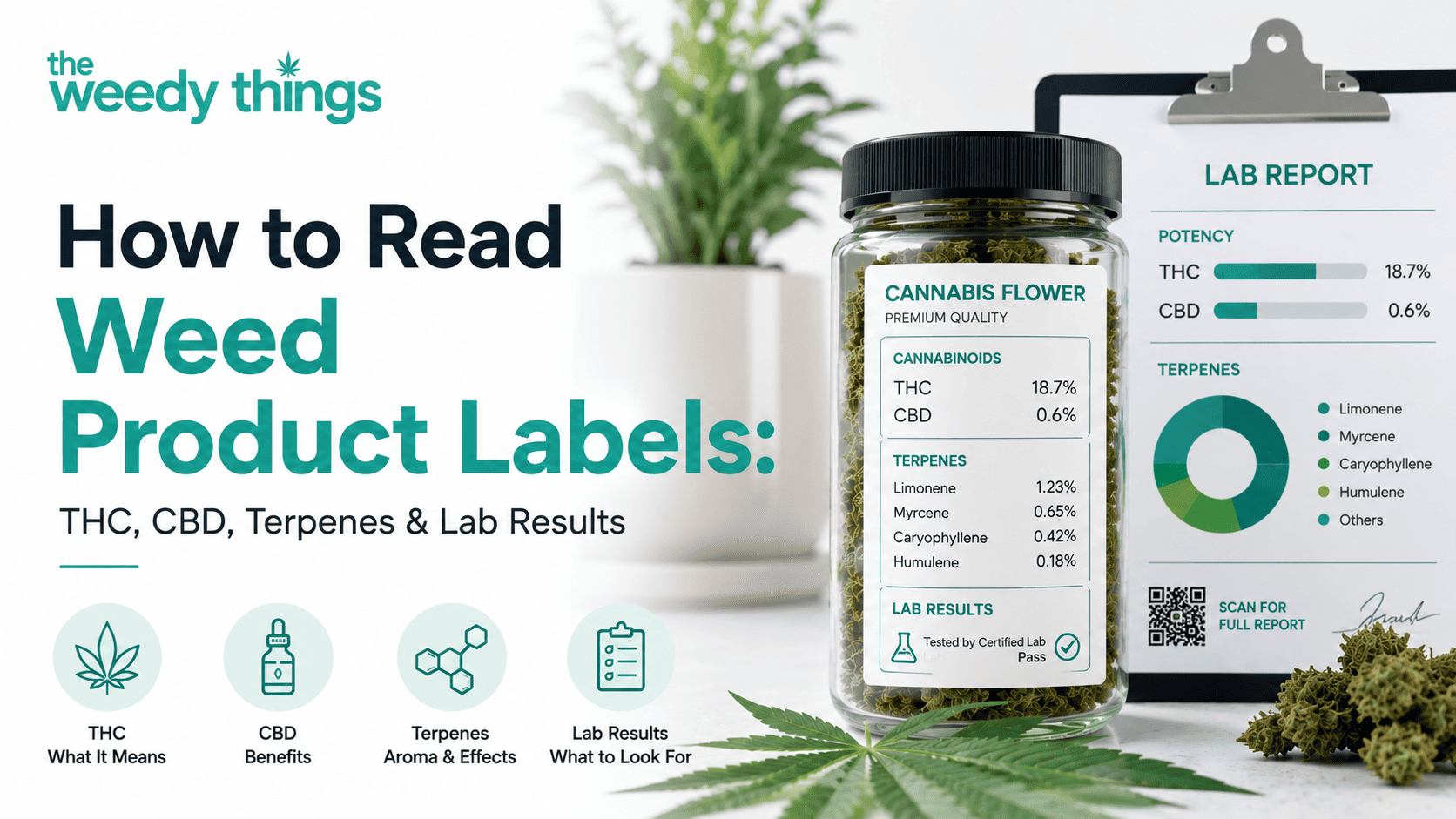
When you first look at a weed product label it can be really confusing. There are many things on the label like percentages and symbols and lists of ingredients all on a small package. This can be a lot to take in. The good thing is that once you know what all these things mean it becomes easy to understand the label.
Every single thing on a cannabis label is there for a reason. The label tells you what is in the weed product, how strong the weed product is, if the weed product has been tested to make sure it is safe and how to use the weed product in a way. For people who’re new to using weed products and for medical patients, understanding what is on a weed product label before you buy the weed product is a very important thing to do.
In this guide we will explain every part of a cannabis product label, in words so you can buy and use weed products with confidence.
The Standardized Cannabis Symbol: Your First Check
When you are going to buy cannabis first look for the cannabis symbol on the package. In Canada this symbol is a triangle with an exclamation mark inside it. This means the product is legal and safe to use because it follows the rules set by Health Canada.
In the United States there are symbols on cannabis products like edibles. These symbols are important because they tell you away that the package has cannabis in it. This is really important if you have kids or pets at home. You do not want them to get into something that could hurt them.
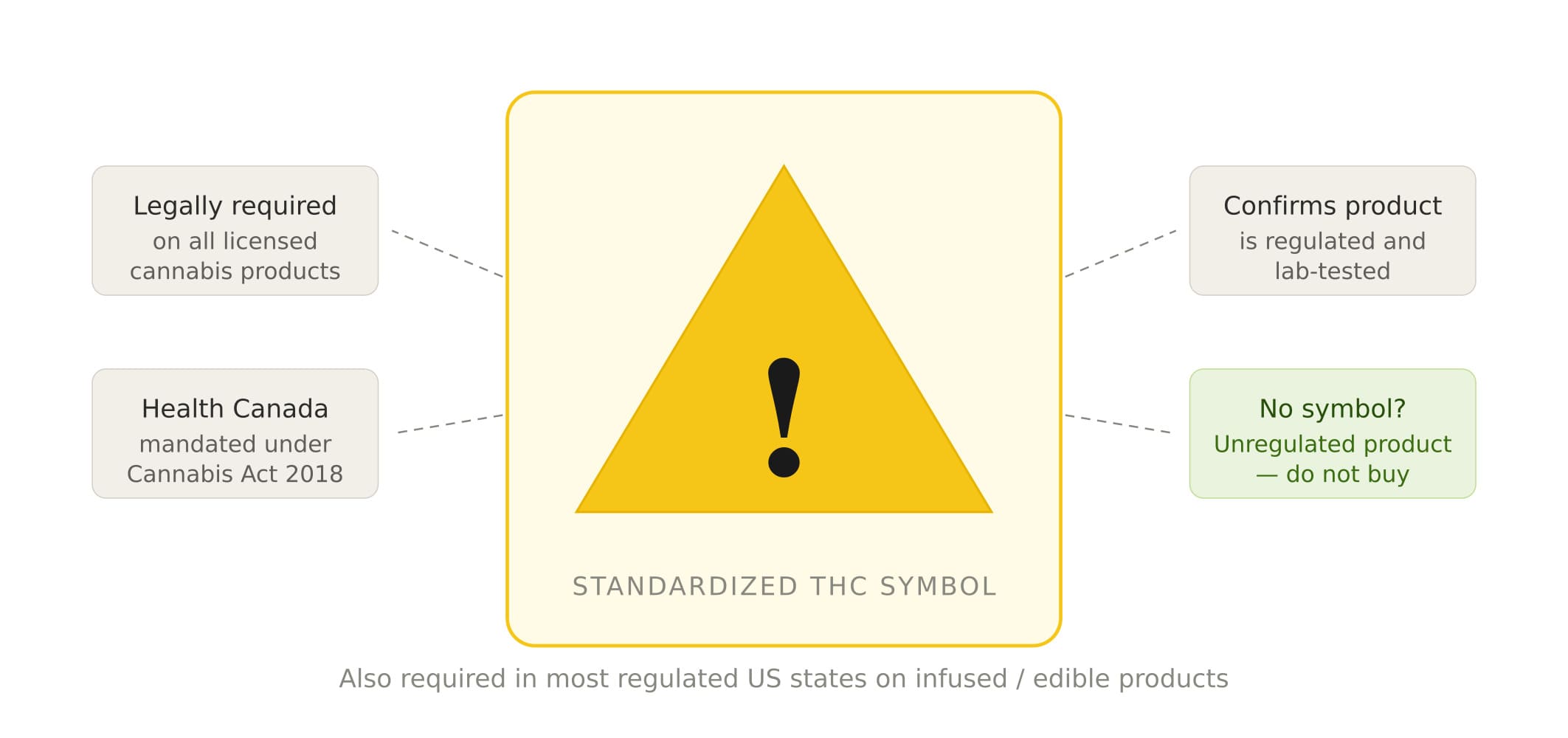
If you do not see any symbol or information about a license on the product that is not a sign. You should only buy cannabis from places that are allowed to sell it. You can find a list of these places, on TheWeedyThings dispensary directory. They have a list of dispensaries that are verified and safe to buy from. Always remember to look for the cannabis symbol and make sure you are buying from a dispensary.
How to Read THC and CBD Percentages on Weed Product Labels
Percentages of THC and CBD are two key figures which must be present on the label of any marijuana product. Tetrahydrocannabinol, or THC, is the element causing the “high” effect while cannabidiol, or CBD, does not cause any intoxication and is usually related to soothing properties. The knowledge of how to understand both of them is crucial.
Is 0.2% THC a Lot?
People who are new to this often ask if 0.2% THC is a lot. The answer is no. Things with 0.2% THC have little that can affect your mind. In places 0.2% is the limit for hemp-derived CBD products. To compare the THC in cannabis flowers that people use for fun is usually much higher from 15% to 30%.
If you are just starting out Health Canada and most state health agencies say to begin with 2.5mg of THC or less each time. Also always wait at least two hours before taking more especially if you are eating it because it takes a lot longer to feel it than if you breathe it in.
If you want something with THC you can look at different kinds of cannabis strains and find the ones that are not too strong which is good for people who are new to this.
What Does mg/g Mean on a Cannabis Label?
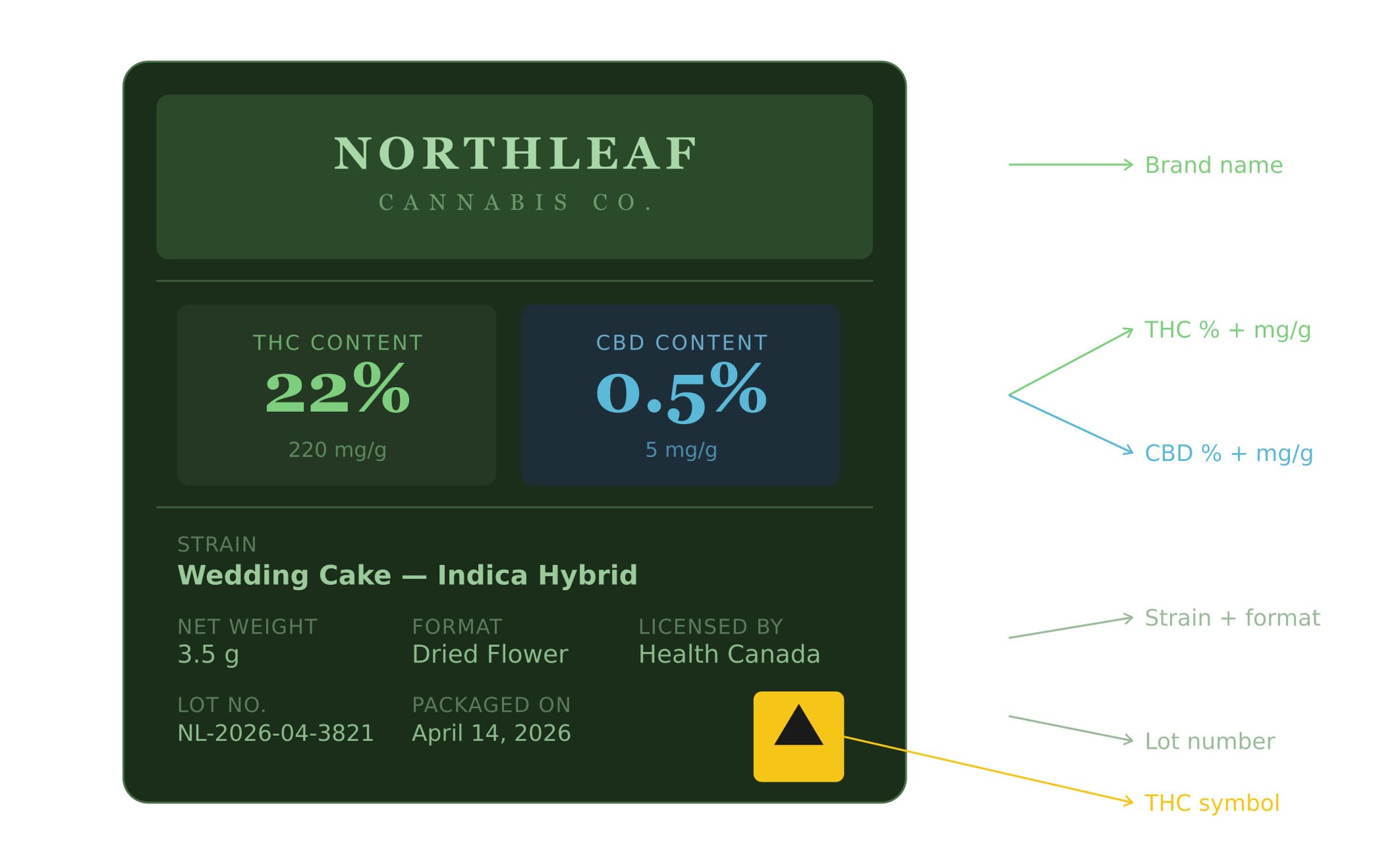
The milligrams per gram unit is something you will see on Canadian cannabis products that are licensed. This unit is really milligrams per gram. If you want to know what percentage that is you just divide the number by 10. For instance if a product has 150 milligrams per gram of THC that’s the same as 15 percent THC.
I think this way of measuring is actually better than using a percentage because it is more accurate when the products weigh different amounts. It also makes it easier to compare how strong different types of products are. If you are ever unsure just divide the milligrams, per gram of THC by 10. You will know the percentage right away.
Understanding Terpene Profiles on Weed Product Labels
Terpenes are the things that make each kind of cannabis smell and taste different. They are like perfumes. But what is really cool about terpenes is that they also affect how the other stuff in cannabis like cannabinoids makes you feel.
The way that terpenes and cannabinoids work together is called the entourage effect. This is why two cannabis products can have the same amount of THC but they can make you feel totally different.
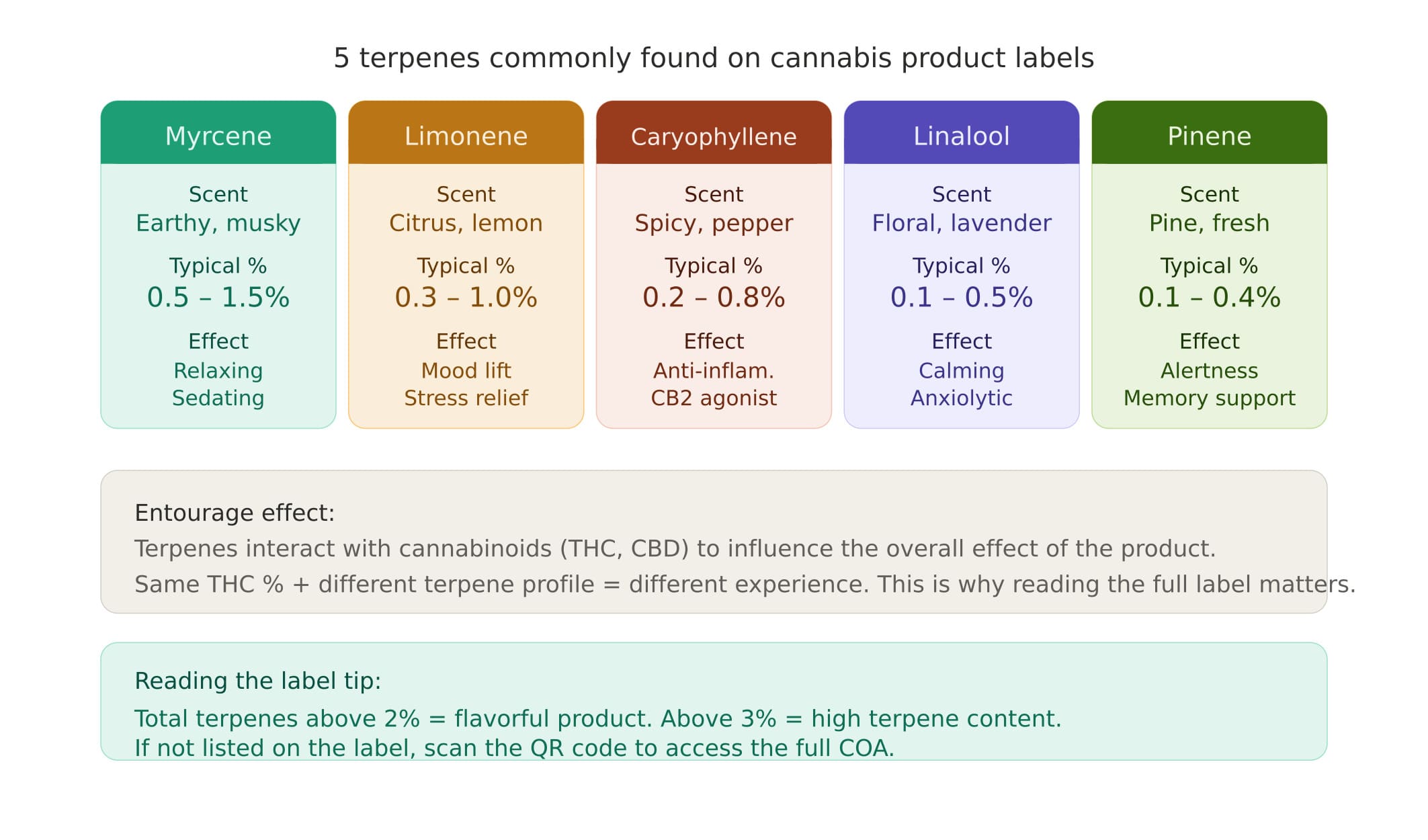
Premium cannabis products often list a terpene breakdown directly on the weed product label or in the attached Certificate of Analysis (COA). Here are the five terpenes that you will see often:
- Myrcene – earthy, musky scent. Generally associated with relaxing and sedating effects. Very common in indica-leaning strains.
- Limonene – citrus aroma. Often linked to mood elevation and stress relief.
- Caryophyllene – spicy, peppery notes. Notably, it is the only terpene known to interact directly with CB2 receptors, making it a point of interest for anti-inflammatory research.
- Linalool – floral scent, similar to lavender. Associated with calming and anxiolytic effects.
- Pinene – fresh pine aroma. May support alertness and help counteract some short-term memory effects of THC.
When you are looking for something that tastes good you should look for products with a lot of terpenes. If a product has more than 2 percent terpenes it is considered to have a lot of flavor. If it has more than 3 percent terpenes that is really high. So if you care about how something tastes and smells you should pay attention to the terpene percentage on the label.
To learn more about types of cannabis and what terpenes they have you can look at the cannabis strain library. The library has a lot of information about the terpenes and other things, in each type of cannabis.
How to Read the Full Cannabinoid Profile
Detailed weed product labels and Certificates of Analysis often list cannabinoids beyond just THC and CBD. Knowing all the cannabinoids in your product provides a better idea of what you will be consuming.
Therefore, when a product label lists multiple cannabinoids in detail, it generally indicates a more thoroughly tested and transparent producer. That level of detail is a good sign.
Lab Test Results and Certificates of Analysis (COA)
When you buy cannabis from a licensed cannabis producer they will give you the results of third-party lab tests, which are also called a Certificate of Analysis or COA. You will usually find these either printed directly on the weed product label or accessible by scanning a QR code on the packaging. The Certificate of Analysis is like a guarantee that what is in the product’s really what the brand says it is.
What to Check on a COA
When reviewing a Certificate of Analysis, look specifically for the following test categories:
- Potency testing – Potency testing is important because it confirms that the actual levels of THC and CBD in the product are what the label says. The cannabis producer should have this test to make sure the cannabis product has the amount of THC and CBD..
- Pesticide screening – Pesticide screening is another test that the cannabis producer should have you want to see that the result is clean. The cannabis producer checks for pesticides like bifenazate, myclobutanil and abamectin.
- Microbial testing – The cannabis producer also does testing to check for bad things like E. Coli, Salmonella and Aspergillus. This test is especially important for people who use cannabis for reasons.
- Heavy metals testing – Heavy metals testing is also done by the cannabis producer to check for things like lead, mercury, arsenic and cadmium. This is important because cannabis can absorb things from the soil it is grown in.
- Residual solvents – The cannabis producer also checks for solvents, which is important for things like concentrates and extracts. This test makes sure that there are no chemicals left in the final product.
- Mycotoxins – The cannabis producer screens for mycotoxins which’re bad things that can grow on the cannabis if it is not stored or grown properly.
If a product does not have a scannable QR code linking to a COA, or the producer cannot provide test results when asked, do not buy it. Transparency is a baseline standard in any regulated market.
Common Contaminants Listed on Cannabis Product Labels
Licensed cannabis products in regulated markets go through rigorous contaminant testing before reaching store shelves. Consequently, buying from a licensed dispensary significantly lowers your risk of exposure to harmful substances.
The most common contaminants screened for and referenced on a COA include:
- Pesticides such as bifenazate, myclobutanil, and abamectin
- Heavy metals including lead, mercury, cadmium, and arsenic
- Residual solvents such as butane, propane, and ethanol in concentrates and extracts
- Microbial agents including E. coli, Salmonella, and Aspergillus species
- Mycotoxins formed from mold exposure during cultivation or storage
A safe, compliant product will show either ND (not detected) or a value below the legal limit for each contaminant. Health Canada sets and enforces these standards for all licensed products in Canada, while individual state health authorities govern testing requirements in the US.
To explore verified brands and check their licensing status, browse the licensed cannabis brands directory.
Red Flags to Watch for on Weed Product Labels
You should know what a bad label looks like because it is just as important as knowing what a good label includes. Here are the common warning signs that should make you stop before buying a product:
- No standardized cannabis symbol anywhere on the packaging
- No lot number or production date (required for product recalls)
- Missing producer license number
- No allergen information on edibles (dairy, gluten, nuts, soy must be declared)
- Health claims such as ‘cures anxiety’ or ‘treats depression’ (these are illegal under both Health Canada and US state regulations)
- THC claims above 35% with no third-party COA to verify
- Packaging designed to resemble candy or products marketed toward children
If a product does not have a QR code and the seller cannot show you the lab results you should not buy it. Only buy from sellers who are verified and licensed and who are listed in the dispensary finder or the delivery directory. Cannabis products should be bought from sellers who are trusted and follow the rules. You should always check the label of a cannabis product before you buy it and make sure it has all the information, like the cannabis symbol and the producer license number.
How to Read an Edible Package Specifically
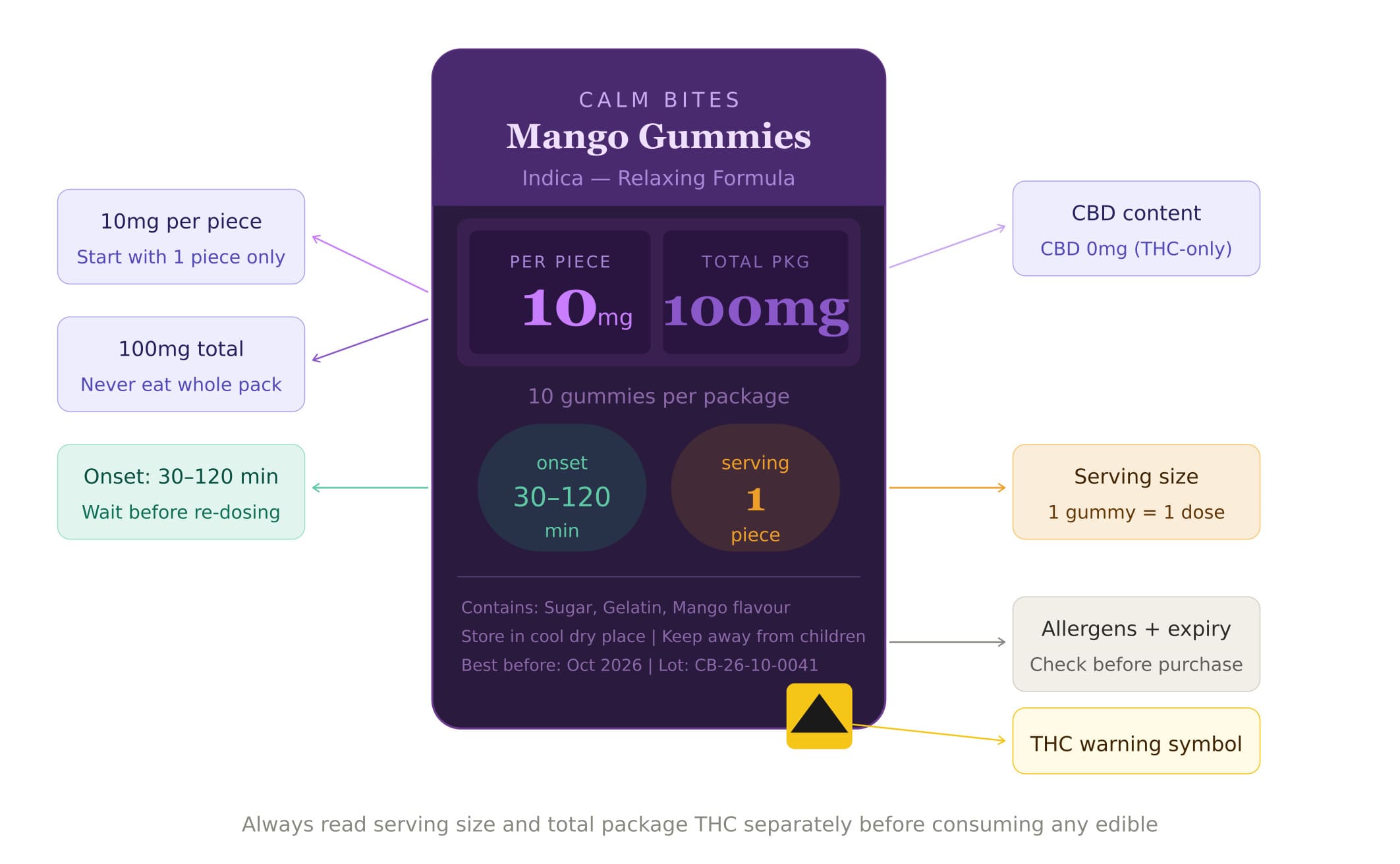
Edibles have rules for labeling that flower and vapes do not. When you grab an edible look closely at these parts on the weed product label:
- Serving size vs. total package size – If you have one gummy in a 10-pack that’s one serving. The label might say 10mg per gummy but 100mg total for the pack. Don’t eat the package thinking it’s just one dose.
- Onset time – Edibles take 30 minutes to 2 hours to work. This is much longer than smoking or vaping cannabis. Many new users accidentally eat much because they don’t wait long enough.
- Nutrition facts table – All food-type cannabis products must have this. Check for things like allergens, total sugars and calories.
- How to store – Most edibles need to be kept in a dry spot away from direct sunlight, kids and pets.
- Expiry date – Edibles can lose potency over time, especially gummies and chocolates. Always check the before date.
Conclusion
Reading the labels on weed products is really important if you want to be safe and know what you are getting. When you understand what the THC symbol is and how to figure out the percentages of cannabinoids and what the terpene profiles mean and what to look for in a certificate of analysis you are not just guessing anymore. You are actually making a decision that is based on information.
If you are new to weed or if you are a patient who uses weed for reasons and you are trying to find the right weed product for your needs the label on the product is the best way to get the facts. In fact, the more comfortable you become reading weed product labels, the better your overall experience with cannabis will be. So use this guide to help you every time you try a weed product.
Frequently Asked Questions
How do I read and understand THC and CBD levels on weed product labels?
CBD are shown as a percentage or in mg/g. On flowers, 20% THC in a 1g unit equals 200mg total. On edibles, check per-serving mg separately from total package mg. Always start with the lowest dose available.
What does mg/g mean on a cannabis label?
It means milligrams per gram. Divide by 10 to get the percentage. So 150 mg/g THC equals 15% THC.
What do terpene profiles on weed product labels mean?
They show which aromatic compounds are in the product and how much of each. Terpenes like myrcene, limonene, and caryophyllene influence aroma, flavor, and effects. A detailed terpene profile is a sign of a well-tested product.
What red flags should I look for on marijuana product packaging?
No cannabis symbol, no license number, no COA or QR code, any health claims, and packaging that looks like candy or children’s products. Always buy from licensed dispensaries only.
How do I identify safe pesticide and contaminant levels on cannabis labels?
Check the Certificate of Analysis (COA) via the QR code on the package. A safe product shows ND (not detected) or values below the legal limit for pesticides, heavy metals, and solvents. No COA means do not buy.
Is weed physically addictive?
Not in the way alcohol or opioids are. However, heavy daily use can lead to dependence in some people. Mild withdrawal symptoms like irritability and disrupted sleep can occur but are generally manageable.