 Dispensaries
 Deliveries
 Brands
  Deals
Deals Learn
Learn Strains
  Doctors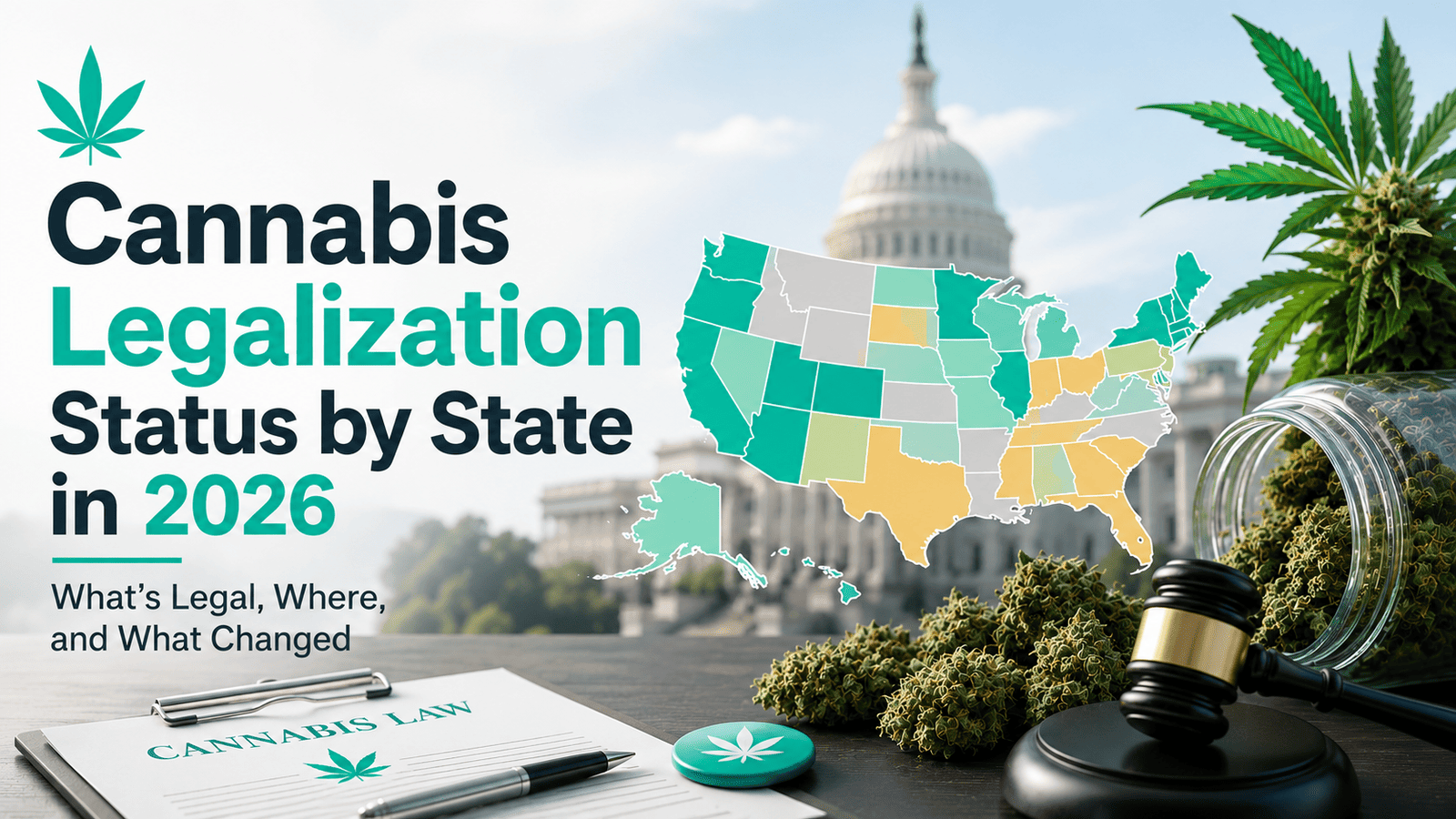
If you are trying to stay on top of cannabis legal states in the US, you have a lot of company. The rules are changing fast, and the numbers for 2026 are pretty amazing. Out of 50 states, 24 states plus Washington D.C. Now let adults 21 and over use cannabis for fun which is 50% of all US states. There are also 14 states that only let people use cannabis for reasons so only 10 states do not have any kind of cannabis program. This is totally different from over 10 years ago when only 2 states let adults use cannabis.
Whether you are new to using cannabis and just moved to a state where it’s legal or you are planning a road trip and want to know where you can stop or you are someone who keeps track of all the votes on cannabis this guide will show you everything you need to know for 2026. We will tell you which states let you use recreational cannabis, which states let you use it for medical reasons, what big changes happened this year, how to find a place to buy cannabis and what you should know before you travel to a new place with cannabis.
Which US States Have Fully Legalized Recreational Cannabis?
When we talk about legalization or what some people call adult-use legalization it means that any adult who is 21 years old or older can go into a store that is allowed to sell cannabis, buy some and then use it without having to get a doctor to say it is okay or have a medical reason, for using it. As of May 2026 there are 24 states and Washington D.C. That have reached this point:
- Pacific Coast: California, Oregon, Washington, Alaska
- Mountain West: Colorado, Nevada, Montana, Arizona, New Mexico
- Midwest: Michigan, Minnesota, Ohio, Illinois, Missouri
- Northeast: New York, New Jersey, Connecticut, Rhode Island, Vermont, Maine, Massachusetts, Maryland, Delaware
- South: Virginia (possession only; retail sales pending January 2027)
- Federal District: Washington D.C. (gifting model only; no licensed retail stores)
Cannabis Legalization Status by State
Not sure where your state falls on the legal map? The table below covers every state with an active cannabis program, so you can find your answer in seconds.
What About Medical-Only States? Here’s What Patients Need to Know
How to Obtain a Medical Cannabis Card in a State Where It Is Legal
Getting a medical cannabis card is more straightforward than most people assume. The general process works like this:
- Step 1 — Verify your qualifying condition: Most states accept chronic pain, PTSD, anxiety, cancer, epilepsy, multiple sclerosis, and other conditions. Check your state health department’s official website for the full list.
- Step 2 — Get a physician recommendation: Book a consultation with a state-licensed cannabis physician. Telemedicine appointments are available in most states and typically cost between $50 and $150.
- Step 3 — Register with your state program: Submit your physician’s recommendation, a valid ID, and your application fee (usually $50 to $200) through your state’s official medical cannabis portal.
- Step 4 — Receive your card: Processing times range from 2 to 4 weeks in most states. Some states issue a temporary digital card so you can visit a dispensary sooner while your physical card is being processed.
Once your card is approved, you can visit any licensed medical marijuana dispensary in your state. Some states say it is okay for people with marijuana cards from other states to buy medical marijuana when they are visiting. But this is not true for all states so you should always check before you go to a state. You should check if the new state will let you use your marijuana card from your home state. See example card for your reference:
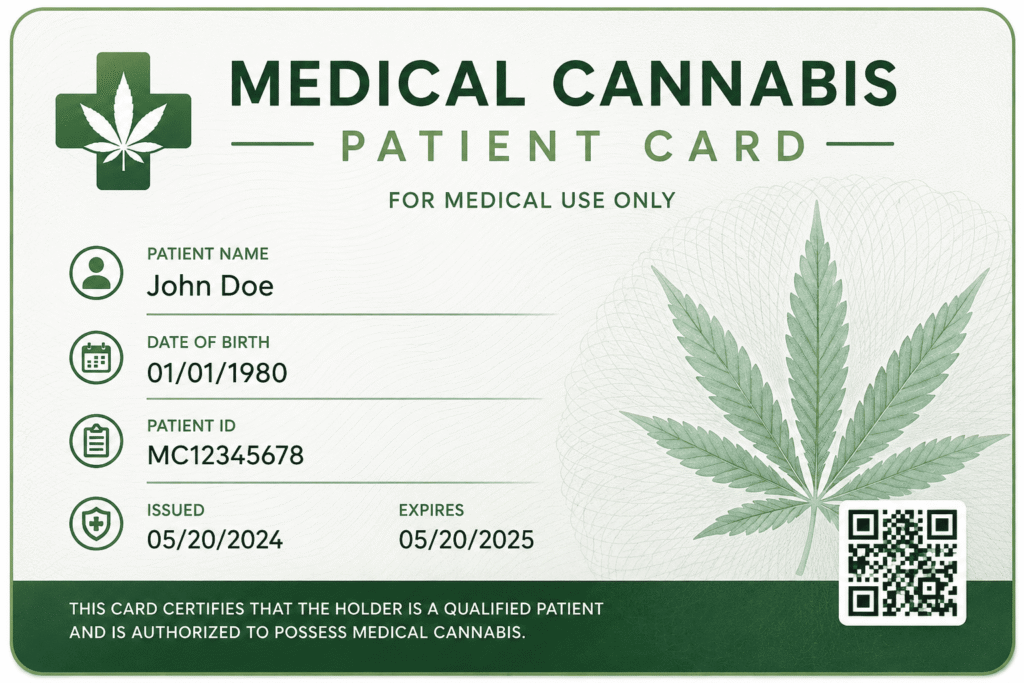
Medical Cannabis Patient Card
What Changed in 2026: The Biggest Updates This Year
2026 is turning out to be a year for changes in cannabis laws. Some major things are happening that are changing how things work. Understanding these changes helps you know what might happen next with cannabis policy. The year is really important for cannabis policy reform. Several big developments are happening now. These are reshaping the landscape of cannabis policy.
1. Federal Rescheduling Is Moving Forward, But Slowly
President Trump issued an executive order in December 2025 asking the Attorney General to expedite the rescheduling of cannabis. While cannabis is classified under Schedule I, it might be rescheduled to Schedule III through the Controlled Substances Act. It was reported that as of May 2026, the rescheduling of cannabis has not been completed even after much push from Congress. Rep. Steve Cohen has expressed his disapproval of the DEA and DOJ in March 2026 for not completing the task.
Rescheduling of cannabis does not legalize its use throughout the United States but will be beneficial to cannabis business because of better access to banks, tax breaks, and scientific research that can lead to medical breakthroughs.
2. Virginia’s Retail Framework Hits a Wall
Virginia was getting ready to start selling marijuana in stores in 2026. Then in May 2026 the governor said no to the bill that would have made it legal to sell marijuana in stores. This happened after the legislature did not agree with some changes that were suggested. This was bad news for the many medical marijuana stores that were already open and wanted to start selling recreational marijuana too. Now people think that Virginia will have a plan for selling recreational marijuana in stores and it will start on January 1 2027.
3. Idaho Medical Cannabis on the 2026 Ballot
Idaho is one of the states that does not have a cannabis program. This might change in November 2026. A medical cannabis initiative got signatures from voters to be on the state ballot. If people vote for it Idaho will become the state to allow people to use cannabis legally in some way. This is a deal for Idaho and other states in the West that still do not allow cannabis. The medical cannabis initiative is important for Idaho and the cannabis issue. Idaho and the other states that do not allow cannabis are called holdouts.
4. Florida’s Recreational Measure Stays Stalled
Florida’s 2024 ballot to make recreational cannabis legal did not pass. It got 56% of the vote. Needed 60% to succeed. In March 2026 the Florida Supreme Court decided not to look at the appeal from the campaign. This means there will not be another vote on this issue soon. Florida continues as a medical-only state, despite operating one of the country’s most extensive medical marijuana dispensary networks.
States Where Cannabis Is Still Fully Illegal: Know Before You Travel
Despite the progress many states still do not allow cannabis. In fact 10 states have no cannabis program at all. This means you cannot possess, sell or use cannabis in these states. There are no exceptions, except in some cases where you can use low-THC CBD oil. These states are: Idaho, Wyoming, Kansas, Nebraska, North Dakota, South Carolina, Georgia, Tennessee, Indiana, and Wisconsin.If you are traveling through any of these states be aware of the laws. Even if you buy cannabis in a state where it’s legal you cannot take it into one of these states.
Crossing state lines with cannabis is a crime. It does not matter which states are involved. If you buy a product in Colorado you cannot drive it into Kansas. You could get in trouble with the government.
Conclusion:
The legalization of cannabis in 2026 is taking place at an extremely fast rate. With regards to the total 50 states, 24 permit cannabis usage for recreational purposes, 14 states allow cannabis use for medicinal purposes only, and finally, 10 states prohibit cannabis use completely. Regardless of whether you hail from states like California and Colorado where the drug is legal for recreational use or states like Florida and Pennsylvania which allow cannabis usage for medicinal reasons, you should be aware of what the law in your state says. You should always make your purchases from licensed dispensaries and never take cannabis across state borders, especially for medicinal purposes.
Frequently Asked Questions
Which US states have fully legalized recreational cannabis?
As of May 2026 24 states and Washington D.C. Allow adults to use marijuana. Some of these states include California, Colorado, Washington, Oregon and Nevada. Other states that have legalized marijuana for adults are Michigan, Illinois, New York, New Jersey, Ohio and Minnesota. There are also states that have rules. For example Virginia allows people to have marijuana but not to sell it.
How do cannabis dispensaries operate in states with legal marijuana?
Licensed dispensaries are stores where you are required to prove your age (age limit is 21 years or above for recreational use), get assistance from a budtender on various products available, and record sales with the use of state-mandated seed-to-sale tracking system.
What types of cannabis products are available from retailers in legal states?
The products that are commonly found in dispensaries include loose or prerolled marijuana flowers, vape cartridges, edibles (such as gummies, chocolates, and beverages), marijuana concentrates (including wax, shatter, and live resin), tinctures, capsules, and topicals like lotions and balms.
How do I obtain a medical cannabis card in a state where it is legal?
This process consists of four stages: verifying that you have a qualifying illness such as chronic pain, PTSD, anxiety, cancer, and so forth, obtaining a recommendation from a licensed medical marijuana doctor in the state, registering in the medical marijuana system in your state, and paying an application fee, which ranges from $50 to $200.