 Dispensaries
 Deliveries
 Brands
  Deals
Deals Learn
Learn Strains
  Doctors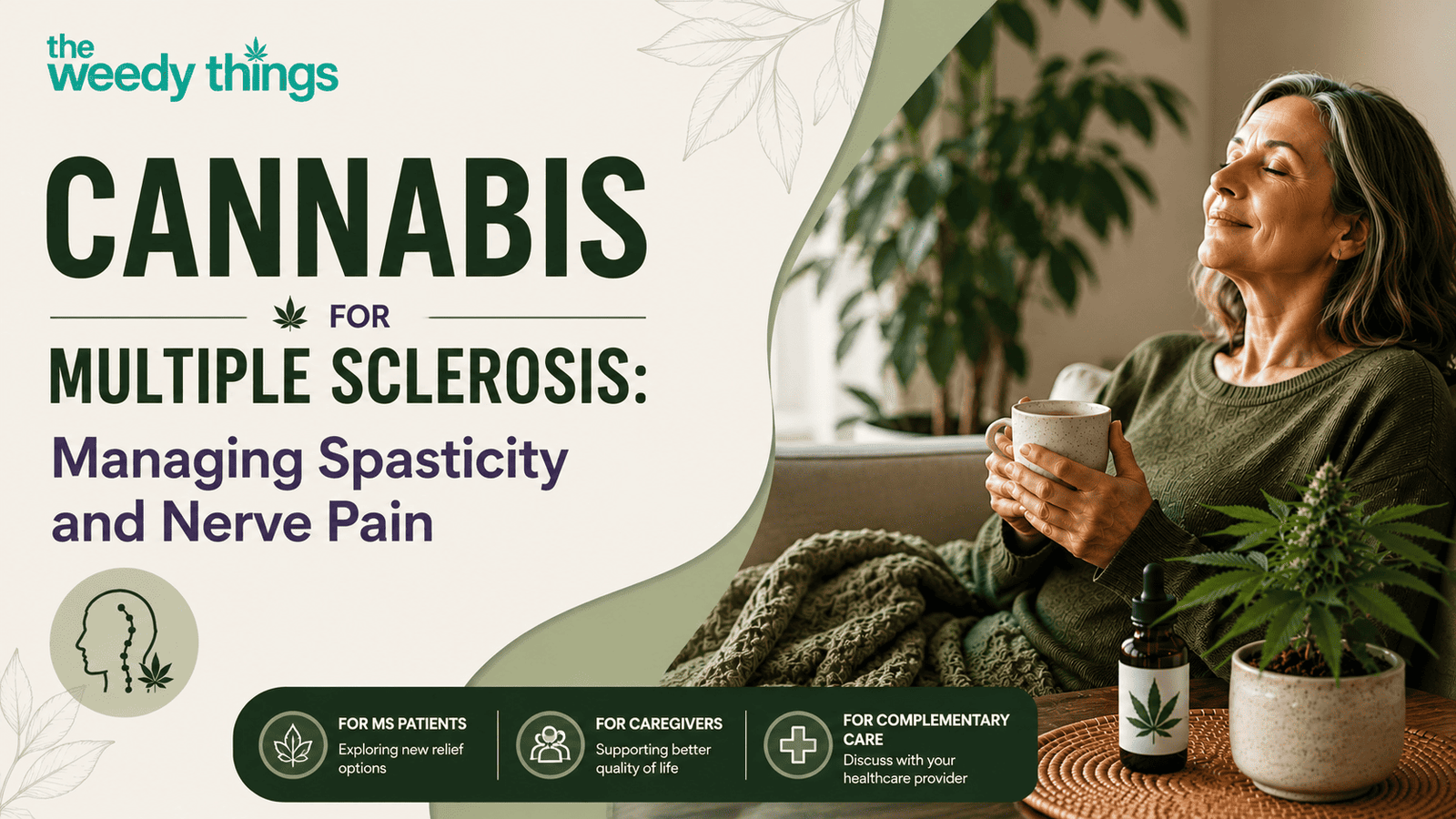
Multiple Sclerosis is an illness that can mean living with a body that does not adhere to its own rules. The stiffness of muscles, sudden spasms, and nerve pain may make even a simple activity like going to the kitchen quite difficult. That is precisely why more and more people suffering from multiple sclerosis are turning to cannabis for multiple sclerosis as one way of dealing with the symptoms when conventional medication fails to provide complete relief. This approach is no longer marginal but represents a trend that has gradually developed among those studying the plant’s influence on multiple sclerosis.
Key Takeaways
- Review articles support that the use of cannabis, especially cannabis containing THC, is very useful in reducing spasticity and pain associated with MS in many people.
- However, Nabiximols, which is an oromucosal spray of THC:CBD, is the most strongly backed; CBD on its own lacks supporting literature regarding MS spasticity.
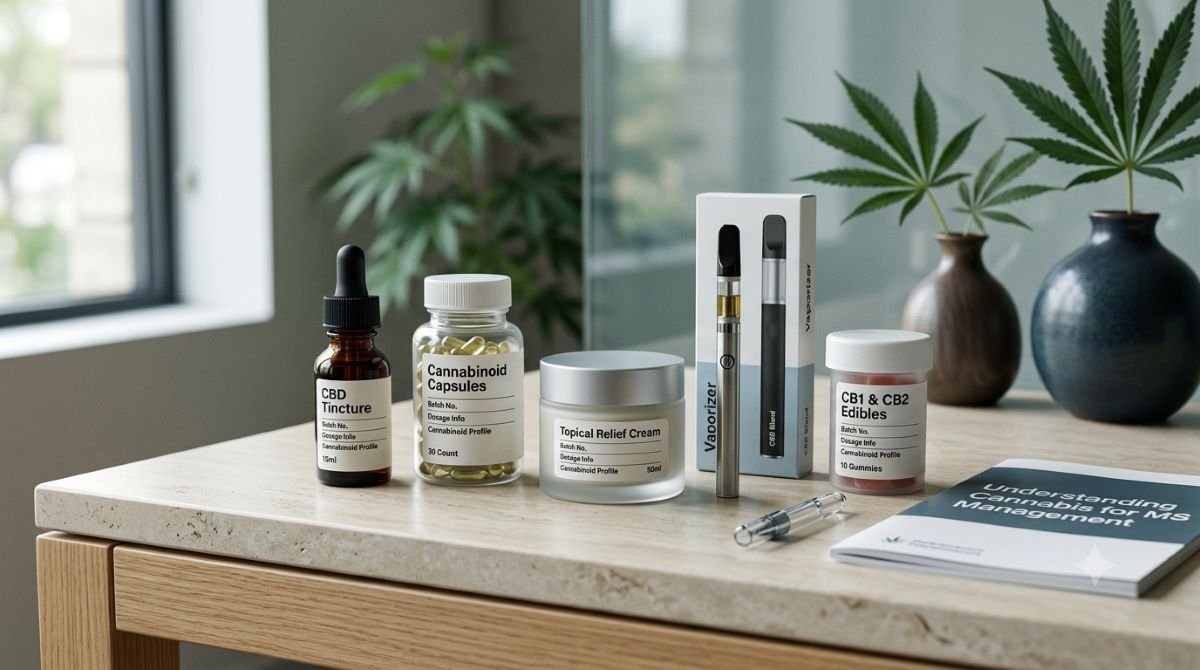
- Dispensaries offer products such as tinctures, capsules, vapes, and topicals based on their application and symptom relief for different patients.
- Cannabis does not provide a cure nor does it replace disease-modifying treatment for MS; it should be taken as an adjuvant treatment.
What Is Multiple Sclerosis?
How Cannabis Talks to the Body: The Endocannabinoid System
What Does Clinical Research Actually Say?
The evidence is not a simple yes or no. That nuance really matters if you are weighing this for your own care. I see how evidence can shape decisions.
- A Cochrane review found that nabiximols, a spray, provide moderate certainty evidence for improving spasticity with the clearest benefit for patients with moderate to severe symptoms that did not respond well to other treatments.
- The Multiple Sclerosis Extract of Cannabis (MUSEC) trial reported twice the rate of relief from muscle stiffness with oral cannabis extract after 12 weeks of use.
- A recent randomized controlled trial comparing THC, CBD and a THC/CBD combination against placebo found no clear difference between the groups though every group, including placebo saw a significant reduction in pain and spasticity.
- A 2025 meta‑analysis pooling nine trials and over 2,500 MS patients found cannabis‑based therapies produced noticeable improvement in spasticity especially with longer use but the authors warned that differences between studies mean the results should be considered with caution.
- A 2026 systematic review and network meta‑analysis covering 27 randomized trials and more than 3,000 MS patients confirmed small benefits for THC:CBD extracts while again pointing out low certainty of evidence and significant variation in how patients responded.
Beyond Spasticity: Pain, Sleep, and Quality of Life
Related Reads on The Weedy Things
Types of Dispensary Products MS Patients Are Choosing
THC, CBD, and Strain Type: What MS Patients Are Learning
Indica-leaning strains such as Granddaddy Purple or Northern Lights are often chosen by patients because they relax the body and ease muscle tension in the evening. Sativa or hybrid strains like Blue Dream are sometimes selected during the day when patients want relief from symptoms without feeling very sleepy. None of this advice can replace a conversation with a budtender or a physician but it shows why people talk about strain selection so much. You can compare these options directly on our strains page. If you want a deeper look at how THC and CBD each affect nerve-related pain our guide that explains how THC and CBD differ for pain relief goes further into that comparison.
What MS Patients and Online Communities Are Saying
A study done by the North American Research Committee on Multiple Sclerosis showed that almost half of the people who took part said they had thought about using cannabis or actually used it to help with their symptoms. In groups where patients talk and in social media posts people often ask the same questions that come up when they search online. They want to know which types of cannabis are best for muscle stiffness if it is okay to smoke cannabis if they have sclerosis and how to find a store that knows about neurological conditions instead of just treating everyone the same way. This matches what many patients say on their own: that the right type of product is different for each person and something that helps one person with muscle stiffness might not help another person at all.
How to Start: Talking to a Doctor and Finding the Right Dispensary
- Start with the available amount of any new product and go slowly adjusting only with your doctors input.
- Keep a symptom log so you and your care team can spot patterns over time.
- Choose a well-reviewed dispensary rather than an unregulated source.
- Ask staff about lab testing and THC-to-CBD ratios, before buying anything.
Legal and Safety Considerations
Cannabis laws differ a lot from state to state and from country to country so MS patients should always check what is legal in the place they live before buying anything. In the United States most states that allow medical cannabis say that MS is a qualifying condition though federal law still treats cannabis differently than states. If you want a list our cannabis legal states guide is updated often and is worth bookmarking. In studies the side effects of cannabis were usually mild. The common complaints were dizziness and dry mouth. Cannabis is not free of risk especially for people who have a history of mental health problems or heart disease.
Conclusion
The study of cannabis for sclerosis is still in progress but the pattern is becoming clearer. Cannabinoids, products that contain THC give real, though moderate and variable relief for spasticity and pain that many patients say usual treatments do not fully solve. As legal access expands some patients even include cannabis tourism in their travel plans going to states or countries with developed dispensary markets to look at product choices they cannot get at home. Wherever you start the safest route is the same: talk to your doctor, start with a dose and rely on resources, such as a dispensary team that truly knows about multiple sclerosis instead of guessing.
Frequently Asked Questions
Is cannabis good for MS?
Research suggests cannabis, particularly THC-containing products, can meaningfully help with spasticity and pain for many MS patients, though results vary from person to person and evidence for other symptoms remains weaker.
What cannabis is best for MS spasticity?
Studies point to whole-plant extracts and THC:CBD combinations as the most consistently studied options, with oromucosal sprays like nabiximols showing the strongest evidence base so far.
Can you smoke cannabis if you have MS?
Smoking is one option some patients use for fast relief, but oral or sublingual forms are generally preferred for the chronic, ongoing nature of MS symptom management, and inhalation isn’t advisable for people with existing respiratory issues.
Can CBD alone help with MS symptoms?
CBD alone doesn’t have strong evidence for treating MS spasticity. Most research points to THC, whether alone or combined with CBD, as the more active ingredient for muscle and pain symptoms.
Where can I find dispensary products for MS?
A licensed dispensary offering lab-tested products and knowledgeable staff is the safest starting point. You can browse dispensary listings to compare options near you, or check our FAQ page for more general guidance.